

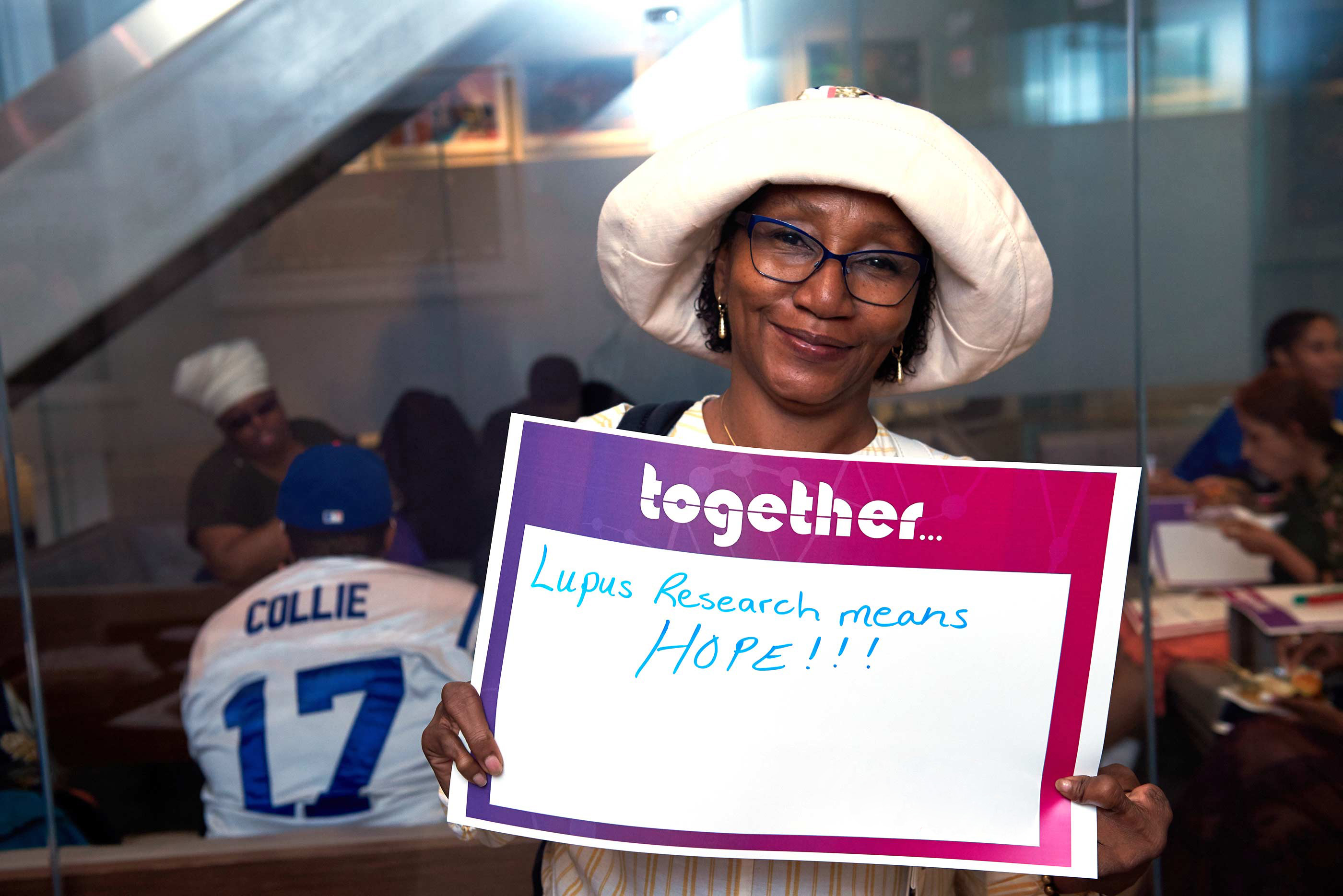
- Tracy
- Age 46
- Los Angeles


Age 46
Volunteer President/CEO Lupus Foundation of Mid & Northern New York
Verona, NY
I know firsthand that we need new drugs to treat autoimmune diseases like lupus.
I suffer from multiple autoimmune disorders and take 27 medications daily, which together cost approximately $4,000 a month. I have suffered for three decades from lupus and a quarter of a century from the devastating side effects from the toxic treatments I have taken. My entire digestive tract is impaired and it takes five different drugs to enable me to eat each day. I haven’t eaten fruits or vegetables in nine years now and suffer from constant colicky abdominal pain.
I first became interested in participating in clinical research trials in 1996 because my health care regimen was failing me. I had been diagnosed with my 7th autoimmune condition and weighed over 200 pounds. When a new symptom would appear, my doctors at the time simply ran more tests, which invariably were inconclusive, or raised my prednisone dosage. One specialist even told me that he had ordered every test he could think of—unless I wanted an autopsy!
I knew I needed to seek expertise elsewhere, and ended up in Baltimore at the lupus and neuromuscular clinics of the Johns Hopkins Hospital. For five years, I was a patient in their ‘Lupus Cohort,’ a prospective longitudinal study of lupus activity and outcomes. While there I received wonderful medical care from one of the nation’s top rheumatologists, Dr. Michelle Petri, and a dedicated staff.
Right away, my family and I knew we had made the right decision. There were many benefits in receiving medical care from a top-notch teaching hospital. They treated nearly 800 lupus patients, so I was one of many instead of the only one. And instead of the “one size fits all” regimen I had been following for 10 years, I was prescribed medications to suit my individual needs. When new symptoms developed, I had state-of-the-art tests to determine what was going on.
The most positive aspect of my clinical trials experience was the way I was treated by the principal investigator and her staff. Up until then, I had been treated like a child with no say in my health care. The Hopkins team taught me how to become more empowered in my medical care by becoming part of my own treatment team. They treated me like an intelligent human being and gave me hope for the future by explaining what was happening with new research in lupus, and how it might impact me.
Participating in clinical trials made me feel like I was part of a much bigger picture and that I could contribute to society even though I am disabled. My parents and I took part in a genetic study together at one point, which made them feel like they were part of the process as well. And the 7-hour treks from my home in central New York to Baltimore with my mother are some of my fondest memories.
I have taken part in clinical research on small blood clots in the brain, a study on cardiovascular complications in lupus, and neuropsychiatric testing to look for cognitive dysfunction. My husband and I did a couple’s relationship study as well. That was a bit stressful because at that time he didn’t really talk about my illness so much—I learned a lot.
I participated in one study in which I had a serious adverse event. At the time, my lupus was flaring very badly and the inflammation was causing me tremendous pain. It was very difficult to make the trip to Baltimore.
My family and I decided that once my lupus was stable, I needed a specialist closer to home. I also felt that I had paid my dues to society, and done my part by being in the study cohort. I know that my experience in the trials helped me immensely in dealing with my own medical care and the care of those I love. So I found a local medical facility affiliated with Columbia University.
My condition remains unpredictable. I take four drugs that compromise my immune system, and I get many infections. I am tired of missing family celebrations and other events because I am sick. I remain hopeful that we will get better and safer drugs for lupus soon, so that patients like me can have a better quality of life.