

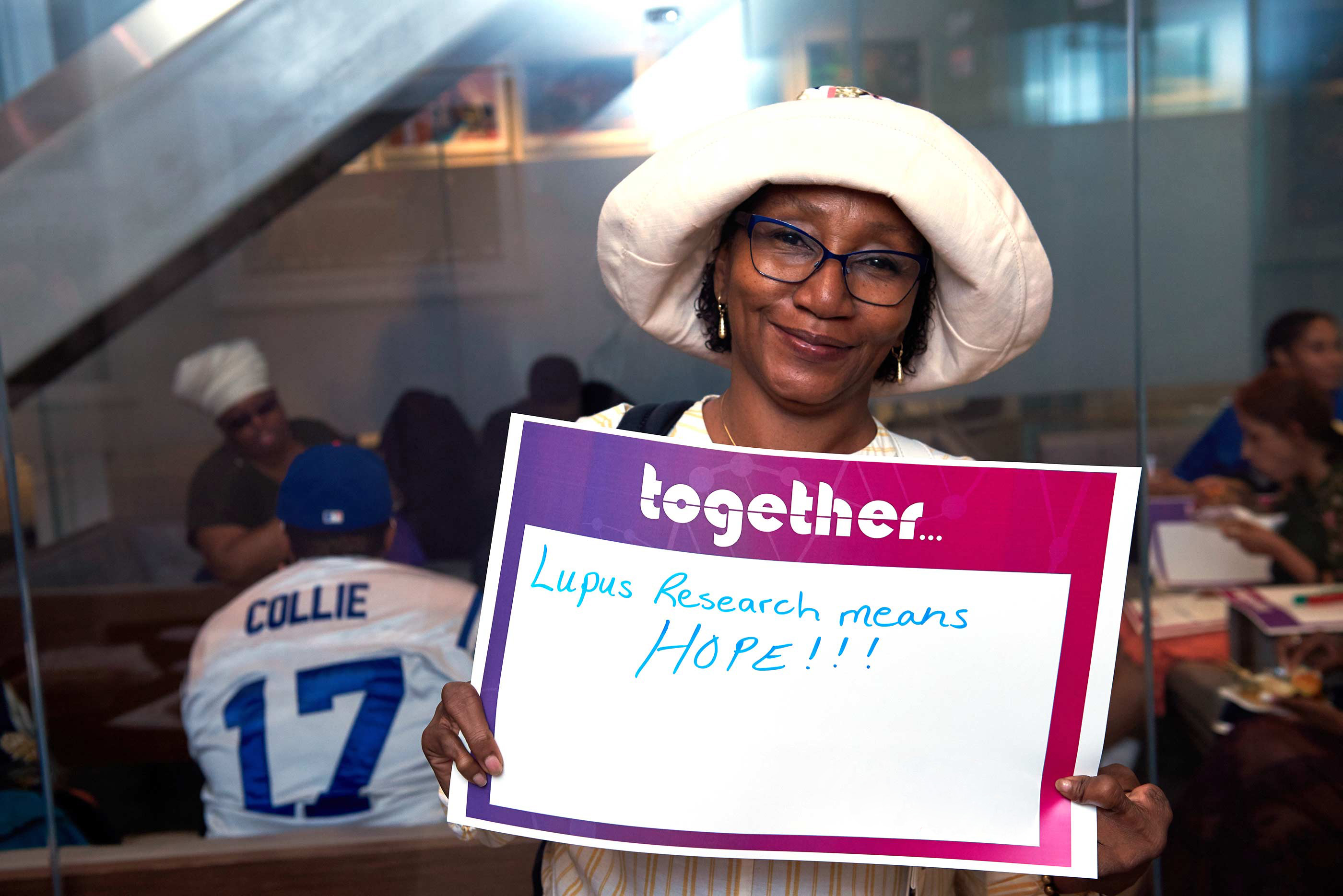
- Tracy
- Age 46
- Los Angeles


Age 38
Rochester, NY
I was diagnosed with Systemic Lupus in 1999. At the time my daughter was 2 years old and I was just about to complete my last semester of nursing school. Finally, after about a year and a half of living with terrible fatigue, debilitating headaches, facial rashes, low-grade fevers, achy joints and other various symptoms, my primary physician ordered some tests of my immune system.
Results showed an ANA of 1:1280 and other positive antibodies. He finally sent me to a rheumatologist. A kidney biopsy showed a Class V Membranous Nephritis and I was started on Plaquenil immediately. My nephrologist said that I had a 30% chance of requiring dialysis within the first 5 years of my diagnosis. A startling wake-up call to say the least!
My doctors recommended that I take some time off of school. I was so close to finishing. I refused. So I finished, but it definitely took its toll on my body. Over the following 9 months, I made a drastic change in my lifestyle. I quit my job as a tech in an intensive care unit (ICU), stopped working nights, and re-developed a normal sleep schedule—sleeping a minimum of 8 hours each night. I strictly listened to my body, resting when needed, and learned to respect my limitations. Although I did require a few “pulse” courses of prednisone over the next few years to keep things controlled, I think that doing these things enabled me to stabilize my renal function.
In 2004, my nursing supervisor cut out an ad from the local paper with information about a clinical trial at a local research center for patients with systemic lupus. I inquired immediately and found out that the study was testing a new drug to control autoimmune disease activity. It was given as an IV infusion medication administered at monthly intervals. I had an appointment with the study coordinator and I fit the inclusion criteria.
I gathered all of the information that I could about the drug and spent a few days contemplating my decision. As a healthcare professional, I know the importance of clinical trials and the impact that they can make in patients’ lives. As a person living with lupus, I know how the disease impacted my life and the lives of so many others, and KNEW that I had to participate. Not so much for selfish reasons, but because of the fact that I had a young daughter, and if I could play any role in helping her generation be able to deal better and have better medications to treat this disease, then I know I have made a difference in her life.
I signed up for the randomized, double-blind, placebo-controlled study. I had the potential to receive one of three doses of the drug or a placebo. I knew within the first few months of treatment that I was receiving a dose of the drug. Being a nurse (and now actually working alongside a rheumatologist in that very same office!), I received copies of my lab results periodically and saw improvements in certain lab values. I was excited to know that the medication I was receiving, although investigational, was making a positive difference in my renal function!
It has been three years now on this medication and my renal function is the best it has been since my initial diagnosis (although my physicians use the term “remission” very loosely—there have been no “abnormal” levels of protein in my urine tests for almost a year!).
I am now in Phase II of the study, for long-term safety data collection. I have had no major side effects from the drug and the only minor side effect is some slight fatigue on the day of the infusion, and the day following.
Lupus is not the only diagnosis I live with. I also have Mixed Connective Tissue Disease encompassing not only Lupus, but Sjogren's and CREST Syndrome as well. But my biggest concern all along was my kidneys and the thought of requiring dialysis. I have beaten the odds once bestowed on me and am able to be a better mom, nurse and advocate for clinical trials because of it!